
Jaw locking / limited mouth opening
The temporomandibular joint consists of a joint head (condyle) and a joint socket, with a cartilage disc (the articular disc) located between them. During normal physiological jaw movements, the joint head and the disc move together. With a sudden, wide mouth opening (such as yawning or biting into an apple), the disc may shift—most commonly forward. When this occurs, a cracking or popping sound can be heard, usually accompanied by significant pain, and it may take a few seconds before the mouth can be closed again. The jaw locking that develops after such events is caused by the displacement of the disc. As the disc shifts out of place, the chewing muscles tense up, further limiting the ability to open the mouth. In this situation, the disc becomes displaced out of the joint space and moves in front of the joint head. During mouth opening, the joint head collides with the displaced disc and cannot move past it, resulting in restricted mouth opening—this is what causes jaw locking. The most noticeable sign is the limited and asymmetrical mouth opening, with deviation toward the affected side.
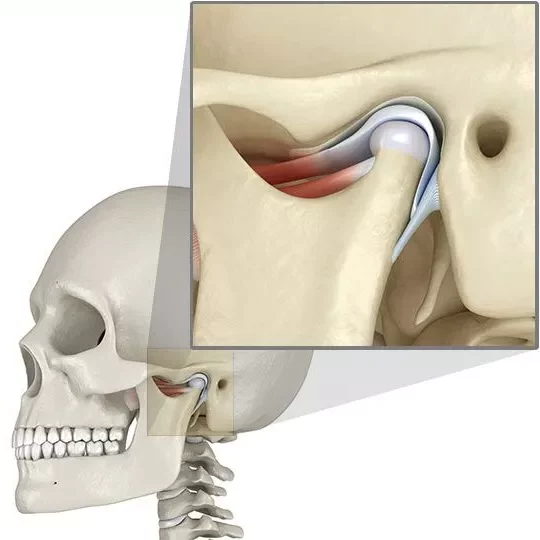
Over time, the symptoms may spontaneously improve — pain may decrease, and the range and straightness of mouth opening may increase — but without appropriate treatment the disc will not return to its physiological position. It is important to seek help from a dentist or a physiotherapist experienced in temporomandibular therapy as soon as possible after the dislocation occurs. The less time that passes after the onset of jaw locking caused by disc displacement, the greater the chance of fully restoring the pre-trauma condition. Acute disc displacement is one of the most effectively treatable temporomandibular joint dysfunctions. Treatment involves using manual techniques to relax the affected chewing muscles, followed by applying joint traction to gently separate the joint surfaces, giving the disc the opportunity to return to its proper position.
Jaw locking gradually developing due to muscle-related problems
Jaw locking does not only occur as a result of disc displacement in the temporomandibular joint. It is also common for limited mouth opening to develop due to muscular problems. Oral bad habits—such as creating suction with the tongue against the palate, clenching the teeth, frequently licking or biting the lips—place significant stress on both the temporomandibular joint and the chewing muscles. Over time, this can lead to reduced mouth opening. Speaking, biting, chewing, and yawning may become painful. To avoid the pain, people often try to rest their chewing muscles by speaking less and opening their mouth only slightly while eating, which leads to a vicious cycle. Avoiding wide mouth opening causes the chewing muscles to shorten further, making jaw movements even more painful. As a result, these movements are avoided even more, eventually leading to jaw locking. If the difficulty with opening the mouth develops gradually, it is likely caused by a muscle-related problem, which can be successfully treated with temporomandibular physiotherapy.
In cases of muscle-related restriction of mouth opening, temporomandibular therapy focuses on identifying and eliminating harmful oral habits and relaxing the chewing muscles. During TMJ therapy, we help patients become aware of the resting position of the jaw and tongue, thereby reducing stress on the overactive muscles. Existing muscle spasms are released using soft-tissue mobilization techniques and relaxation-oriented TMJ exercises. With consistent muscle relaxation and gradual release of spasms, jaw locking caused by tight chewing muscles can be effectively resolved through temporomandibular therapy.

Jaw locking suddenly developing due to muscle-related problems:
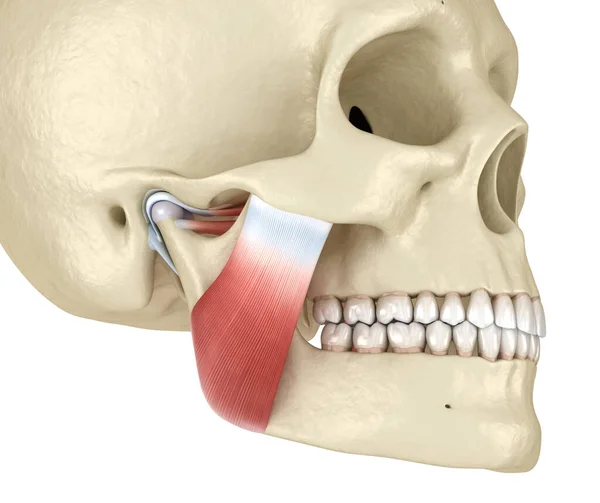
Sudden muscle-related jaw locking most commonly occurs after dental treatment. Because of prolonged mouth opening during the procedure, the chewing muscles become fatigued, leading to a protective muscle spasm. The essence of this protective response is that the body perceives prolonged mouth opening as painful. As a defense mechanism, the chewing muscles tighten so much that they prevent the painful movement — mouth opening — resulting in jaw locking.
Without appropriate assistance, jaw locking may worsen over time. Because opening the mouth is painful, people tend to avoid jaw movements, which leads to further shortening of the muscles. This makes mouth opening even more painful, reinforcing the vicious cycle.
After dental treatment, jaw locking typically resolves spontaneously within a few days. There is no need to “force it open” or use objects such as a wooden spatula to pry the jaw apart. Attempting passive mouth opening with incorrect techniques can lead to further complications. The cartilage disc may shift out of place (disc displacement), which requires prompt professional intervention (see: jaw locking caused by joint-related problems). If jaw locking does not resolve within one week following dental treatment, it is recommended to consult a physiotherapist experienced in temporomandibular therapy. The sooner therapy begins, the easier it is to achieve improvement. During TMJ physiotherapy, we gradually release the jaw locking through specialized muscle-relaxation exercises combined with soft-tissue mobilization techniques.
If you are currently experiencing difficulty opening your mouth and are preparing for dental treatment, it is essential to inform your dentist about the issue. It may also be beneficial to consult a TMJ specialist before the procedure to learn appropriate relaxation exercises. These exercises help prepare the jaw joint for dental treatment and allow you to relieve potential post-treatment symptoms quickly and safely.